Robotic Gantry for CERN's CMS Experiment
A robotic gantry that tripled production of silicon sensor modules for the Large Hadron Collider.
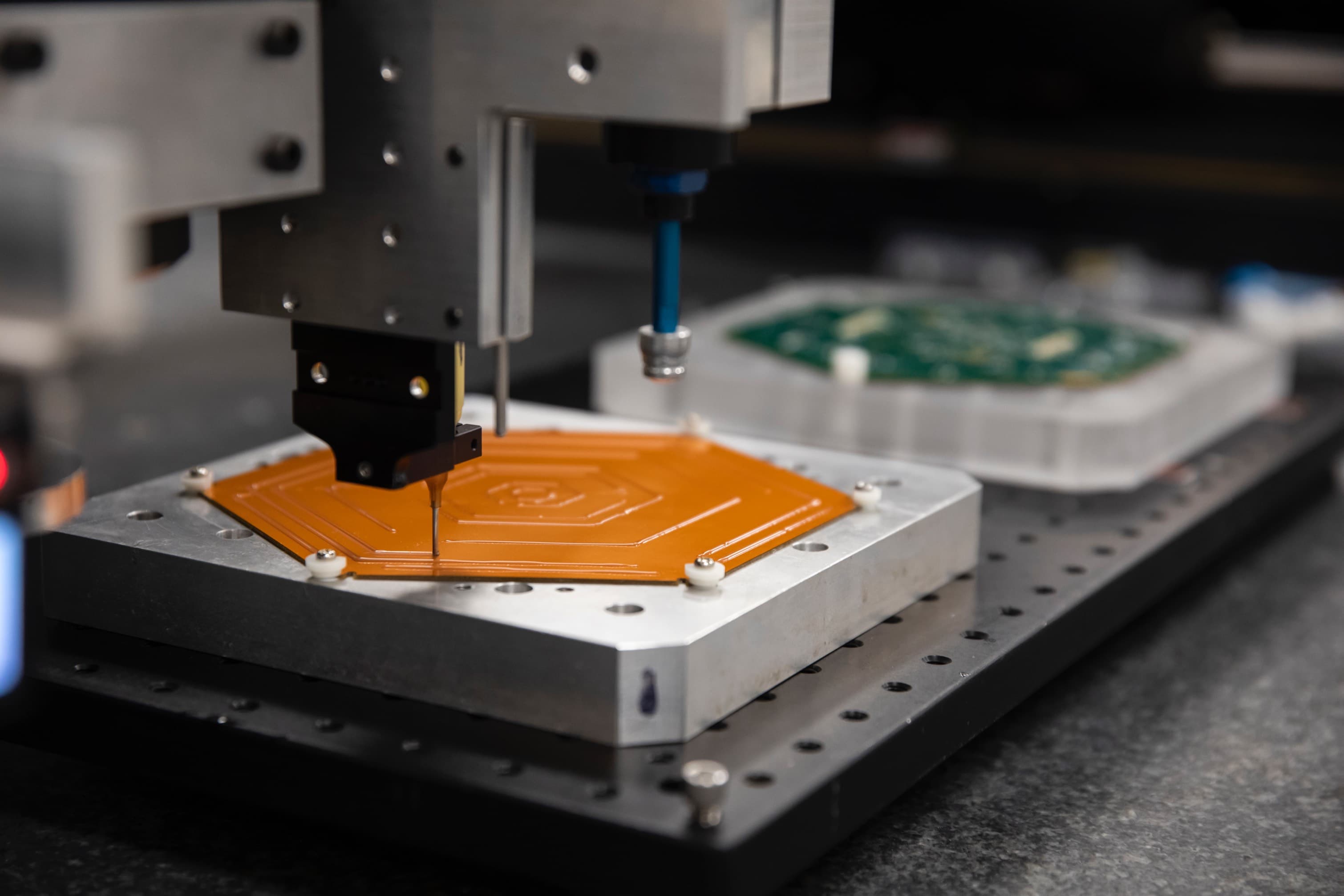
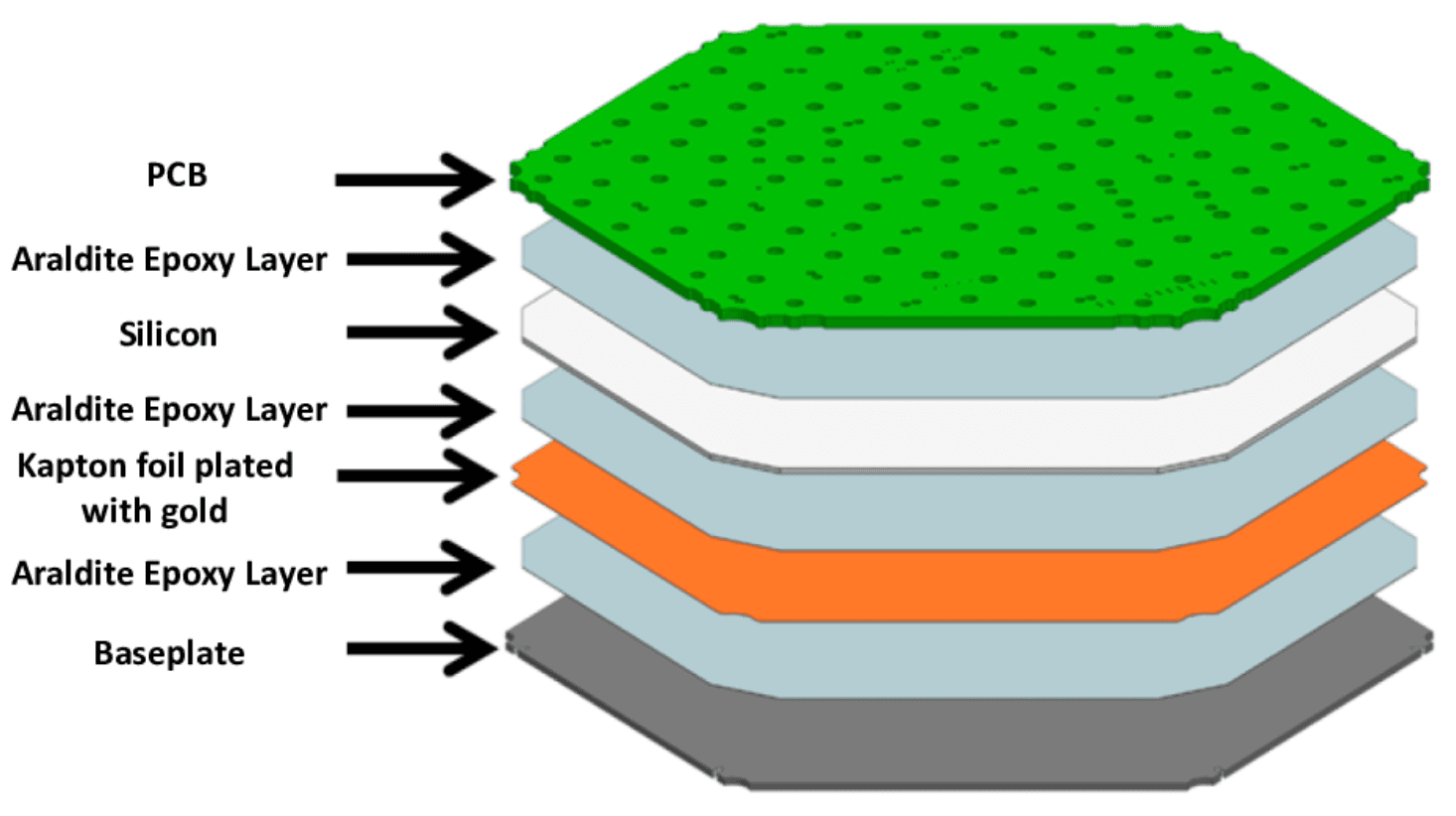
CMS — the detector where the Higgs boson was discovered — is replacing its endcap calorimeters for the High-Luminosity LHC with roughly 30,000 hexagonal silicon sensor modules. UCSB High Energy Physics served as the pilot Module Assembly Center that established the assembly process, and I led the implementation of the large robotic gantry system that automated it.
I developed the gantry controls in LabVIEW and integrated motion control, machine vision, and vacuum systems for fully automated precision assembly of the sensor stack — pick-and-place and epoxy dispensing for 6- and 8-inch hexagonal modules, with the published process achieving ±30 μm placement precision, six modules per workspace cycle. The automation tripled production throughput and significantly cut yield loss.
I did this work in the group of Prof. Joe Incandela (CMS spokesperson when the Higgs discovery was announced), alongside the department's senior development engineers.
Architecture
A multi-axis gantry with custom end-of-arm tooling: vacuum pickup heads for sensor and baseplate handling, a metered epoxy-dispense path, and camera-based alignment against fiducial marks. LabVIEW coordinated motion, vision, and vacuum sequencing into one automated assembly cycle per module stack.